

Janina Elliott, Ph.D. M.Sci Geol.

How did you decide on pursuing your degree(s)? Did you know about geology/geoscience before you entered university?
Geology wasn’t a subject in school when I grew up but I have always been a huge fan of geography, science, history, art and languages. One might ask: how does that get you to geology? I had considered several different degrees; one of the front-runners was aerospace engineering. However, the only subject that combined all my interests and allowed me to explore the world was geology. While Germany (my original home) had a lot to offer in that respect, I knew that English was the language of geoscience. If I wanted to go places, I needed to become 100% proficient and so I decided to jump right into the deep end. I moved to the UK for my undergrad and masters and have not regretted a single day since. Geology is not only the most versatile of sciences providing a life-long opportunity for growth, but the community is unbeatable. As much as I am in it for the science, it’s the incredible people that keep me there.
Describe your career progression since finishing undergrad.
During undergrad I won a scholarship to attend the University of Queensland and from that day forth my love for hard rock geology and mineral exploration was forged. In 2005, I decided to pursue a Ph.D. and post-doc in porphyry and geochemical exploration. The timing was perfect as our industry experienced a bull-market and funded student projects with well-known institutions were plentiful. I purposely chose to join MDRU at the University of British Columbia which in collaboration with CODES at the University of Tasmania were building a powerhouse of industry-funded Au-Cu research. During this time, I was fortunate to have worked with some of the best global scientists and their students some of whom have evolved to be the leaders and decision-makers in our industry today.
After several years of pursuing an academic career path, I decided to enter the industry instead to become a more rounded geologist. When focusing on a single research niche for a while, it is tough to break out and I truly belief that some of the best geos out there are the ones that have seen the mining life cycle in its entirety. Alas, the timing was dreadful. In 2012, the financial crisis had hit the mining market and jobs were rare to non-existent. Yet, as life would have it, an unexpected door opened! Technological innovation in mining was on the rise through advanced 3D modeling and initial global acceptance of cloud-platforms. I had seen my own graduate student showing a true affinity for picking up better ways to learn from and work with digital data. I knew that differentiation oneself in a highly competitive space required a skill upgrade. (Sound familiar? The same applies today yet with even more urgency). However, few experts in the industry held the knowledge tight to their chest and getting exposure outside of work was basically impossible. One day, I saw an advertisement of a small New Zealand-based company that was looking for experienced geos to teach a new implicit modeling product called Leapfrog. I applied, became hire number five in North America, and so an incredible new career path took shape that I couldn’t possibly have dreamed up. Thirteen years later, I am proud to still be with Seequent, one of the most successful geoscience software companies in the world.
Initially, we spoke about what it was that inspired me to study geology, and my answer highlighted the immense versatility of geoscience. With Seequent, I was able to work as a global consultant on basically all deposits styles under the sun. The projects ranged from early prospecting geochemistry and targeting geophysics to active grade control to geotechnical stability analysis in tailings. The technical options were incredible and the best thing: everything was externally facing connecting me to our brilliant geoscience community and allowing me to become a highly proficient presenter.
After a few years of working in an active sales business, one realises that a career path to a leadership role requires once again a more rounded personality that looks to the underlying needs of the people you are creating a product for. A leading lady from an adjacent industry once told me that sometimes the best career trajectory requires temporary lateral movement. I took this to heart and stepped into a less senior role as a sales executive in Energy. Having baby number two on the way, this provided me with an opportunity not only to travel less and match my needs for a more balanced lifestyle at the time but allowed me to truly dive into a new scientific vertical, finance, economics, and marketing. For two years, I build an immense appreciation not only of account management, but what it means to build a business relationship in an adjacent industry with no initial network. It was hard work but immensely rewarding.
At the end of 2024, the person who originally hired me into my first job at Seequent, Rob Ferguson, was about to retire and with his departure a new door opened yet again. Rob has been my mentor since day one and I cannot emphasis enough how important it is to have mentors from all aspect of life to contribute to one’s career path. He felt that I was ready to regain a rung on the ladder and follow in his footsteps as the Segment Director for Mining. Going back to mining full time was easy. I love our industry but now I am experiencing it from the business perspective with a 30,000-foot view. I am focused on the market sentiment in mining, geopolitics, technology and science evolution to provide critical insight into business strategy and decisions. Basically, everything I worked for to become a more rounded professional has culminated in this position and I love every day. Having said all that, am I done? Nowhere near! A new horizon has opened up and the learning is endless. This current job is another opportunity to grow and become more rounded for future chances in the decision-making space.

If you could go back to your first year in undergrad, would you pick the same degree and career trajectory? Why/why not?
Yes, I would but I would bring focus to a few things earlier on to shape future decisions. I would make sure to learn about the industry and the mining business on a global scale earlier on. Understanding the variability and localised opportunities might have encouraged me to learn about hard rock science earlier on and possibly stick with Spanish as my elective! (I can’t believe that I dropped it – missed opportunity to learn with a much younger brain.)
I wish I would have had the chance to spend a summer in a mine or field camp prior to an actual job. Alas, I spend my summers curating the Lapworth Museum’s graptolite collection (riveting). A real-life experience might have helped me to decide whether to enter the industry earlier on. Don’t get me wrong, I am immensely grateful that I have my Ph.D. and postdoc experience but a robust Masters with a few years in an exploration and active mining would have provided an in-depth understanding of the business earlier on.
Geostatistics, geophysics and 3D modeling should have taken up a more prominent part of my schedule. I am glad that I had the chance to immerse myself in technology and data analytics later on, but I didn’t see it as an essential component in school. Today, it has to be the centre stage of an undergraduate degree as our industry moves into the age of real-time automation.
What are the three best things about your job/career? What are three things you would change?
The people – hands down. Mining in general but Seequent in particular, boast an incredible community of curious and down-to-earth people. After so many years at Seequent, I still haven’t met a single individual that I don’t enjoy working with – it’s our secret sauce if you will. In addition to my family, they are the ones that provide me with the drive to do better and reach higher.
Another aspect is the global outreach. The fact that what we do has a significant impact on how we mine for the world community. Of course, with this comes immense responsibility but when done right, it is truly gratifying to support the world in its sustainability and electrification goals. (Note: I am a glass half full person).
The third is the chance to consistently grow with the job. As I said, geoscience, mining and technology have some many facettes. One doesn’t run out of challenges.
What I would change heavily leans into the next two questions on the importance of gender balance.

Why is gender balance in mineral exploration/mining/geoscience important to you? Why should it be important for everyone?
We all know that a well-balanced leadership team and workforce rich in diversity has an edge. New thoughts, ideas, different point of view provides a strategic advantage particularly in what is considered a conservative industry. Nevertheless, a lot of times, being able to attain a position for growth is difficult. The concrete ceiling for women in particular is very real and attaining a senior position in either tech or mining is hard. The ratios are still significantly off and while there is significant change occurring, the root causes are not addressed well enough. I am not going into the detail here that this question requires but I’d like to highlight a concern that I can very much relate to.
In addition to being a full-time professional, women frequently still take on role of the care givers and often carry the entire mental load to support their immediate network. While this is slowly improving, the pandemic has shown us how happily our society falls back into this pattern. Not everyone made it back after taking a “temporary” leave. By not providing the support for women and other caregivers (flexible hours, working from home, options for days off related to care and a female body) or provide alternate avenues (in-house daycare, nursing stations, parental leave support, etc.) we lose a significant portion of our essential workforce. This is particularly disconcerting in a time with an impending labour shortage. How many greenfield discoveries (the world desperately needs) have walked out of the door because of rigid field conditions, inflexible FIFO schedules and gender-related prejudices. The world cannot afford to be blind to the needs of real life and of people. And what some would call an unaffordable concession is really just an adaptation in favour of a greater ROI for all.
What advice would you give to young women starting a career in mineral exploration/mining/geoscience?
Find mentors early! Having a support network outside of your family and friends is essential. They can be frank. You can be honest. Together you can bring clarity to considerations, ideas, and wants that sometimes feels nebulous. Both men and women with experience tend to happily share their observations without pushing or pulling
Ask all the questions! This is hard. Everyone wants to be considered to have all the answers already. That’s unrealistic and completely ok. Commonly, it’s the curiosity in somebody that sparks the interest of an employer. They want somebody who is keen and ready to grow!
Don’t give up. Mining can be unpredictable. Our industry is cyclical and a negative response doesn’t always mean that you are not enough. Keep pushing even if you don’t check all the boxes and be open to broaden your horizon through lateral movement.
What motivates you and keeps you busy outside of mineral exploration/mining/geoscience?
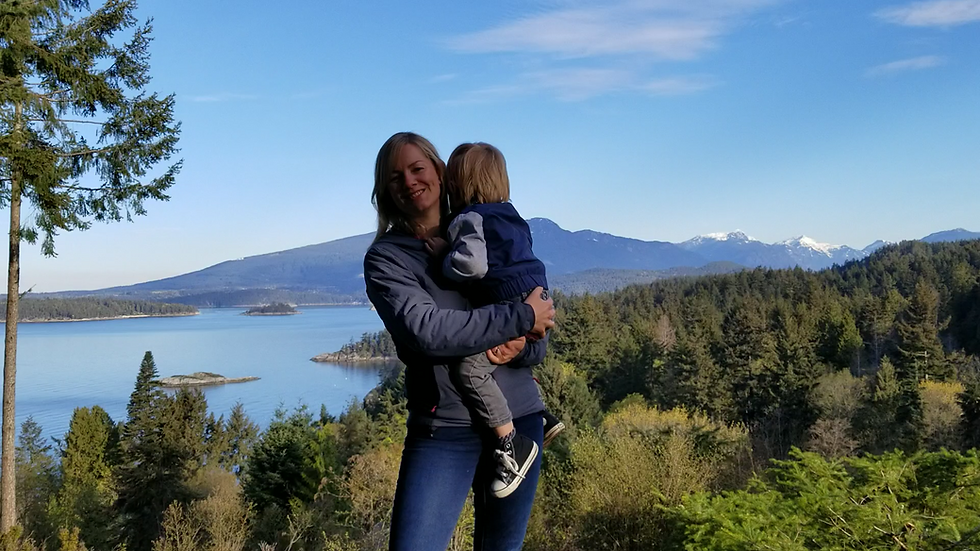
Being a role model to my boys is very important to me. I want them to learn about sustainability, female empowerment, the joy of science, and so much more. As such, we spend a lot of time outside growing veggies, making cheese, preserves and soap, blow up the occasional baking soda volcano, and raising a dog, two cats and chickens.
Other than that, I recently picked up horse riding and archery. I am also an avid reader (and yes, audiobooks are a form of reading for a busy mum) and I am working on my first novel (ten minutes at a time) which of course has elements of geoscience in it.


Comments